


Through Hole Slip Rings In Marine And Offshore Systems: Withstanding Harsh Environments
BY NBG
 2025-12-15
VIEWS: 1649

Through-Hole Slip Rings In Marine And Offshore Systems: Withstanding Harsh Environments
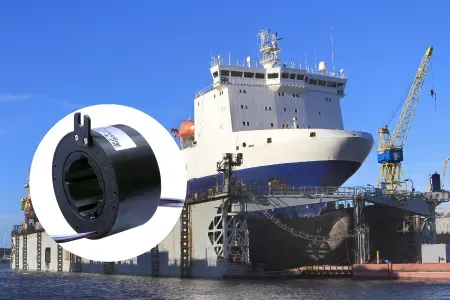
Introduction
Slip rings are vital components of wind turbines and other heavy machinery. In the marine and offshore environment, there is a different view.
For example, the constant humidity and water presence cause oxidation and slowly destroy the metals. Similarly, there is a challenging power transmission through the components.
In such environmental conditions, a 360° rotation and power transmission are inevitable
That is when through-hole slip rings enter the scenario. They offer free movements and easy access to real-time data transfer. Do you want to know what else you can do or what features they have to survive in this environment? This guide will explore marine and offshore conditions and the compliance of through-hole slip rings in such a system.
What are through-hole slip rings?
A through-hole slip ring is named after a central hole that allows the shaft to pass through it. Doing so makes the power transmission and force easily accessible. Such rings are different from the traditional ones in movement and accessibility.
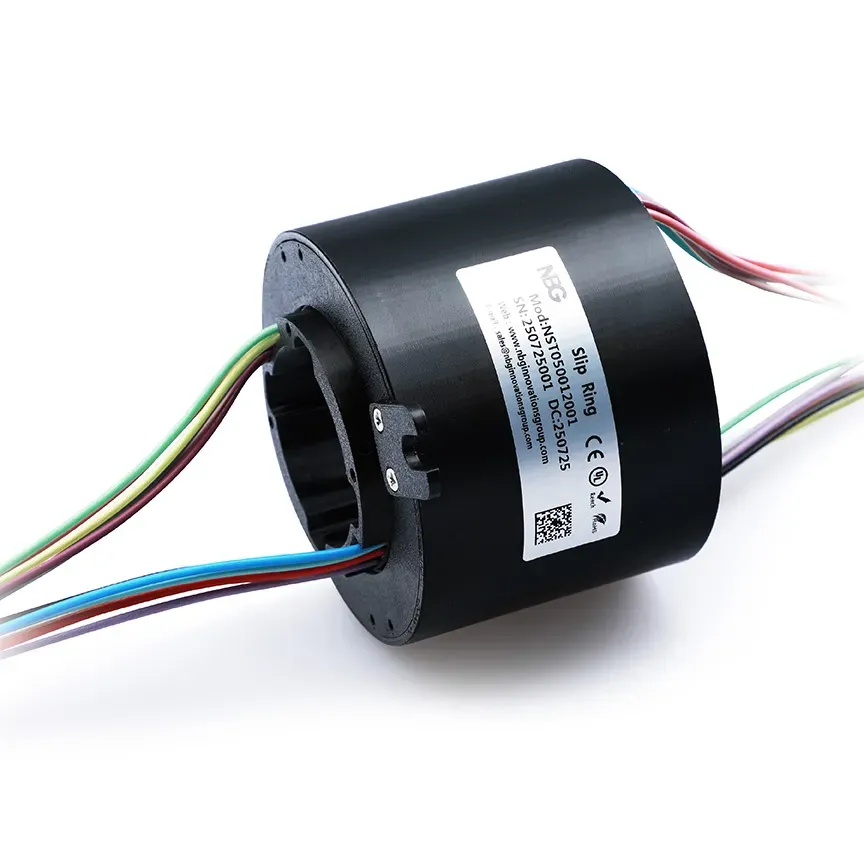
Through-hole slip rings play a crucial role in:
●Winches and cranes on ships
●Offshore drilling platforms
●Radar antennas and rotating sensor systems
●Subsea inspection equipment
Why marine and offshore environments are challenging
Marine and offshore conditions are different from everyday situations. They offer more fluctuations in the environment. There are a few challenges in the marine and offshore environments
Constant exposure to saltwater and humidity
Marine is all about the water. However, in the ocean, there is a high quantity of salt mixed in the water and high humidity. Metal can react with the salt and moisture, and ultimately lead to rusting and quick deterioration. Therefore, slip rings should have a proper enclosure to avoid any damage.
Temperature fluctuations and pressure
In the seashore and marine conditions, metals are under constant stress. There is no continuous temperature or pressure. The varying temperature and pressure extremes are a headache for the devices and components. Therefore, they might lose their performance under such conditions and break down if not managed properly.
Slip rings have to maintain the electrical performance despite the metallic expansion and contraction inside the housing.
High vibration and mechanical stress
Ships and offshore rigs experience one of the worst stresses. The constant vibrations due to heavy machinery require the ultimate strength to perform. In such high vibration and mechanical stress conditions, slip rings have to maintain contact stability and provide performance throughout the operations.
Corrosive atmosphere and UV radiation
It is not just the saltwater, but there are a few more factors to battle. For example, oil vapors, chemicals, and intense sunlight are challenging for the slip rings. They can destroy the housing and might damage the internal components. Therefore, slip rings should be of high quality.
Key Features of Through-Hole Slip Rings for Marine Applications
Through-hole slip rings should have the necessary features to ensure a safe power transmission and stability in performance. Get the following features at any cost.
Corrosion-Resistant Materials
Marine environments have high humidity and saltwater interactions. Therefore, they are corrosive and need possible solutions, such as:
●316 stainless steel housings
●Marine-grade anodized aluminum
●Gold-to-gold or precious metal contacts
●Protective coatings, such as epoxy resin, polyurethane, or Parylene.
Sealing and IP Protection Ratings
IP rating ensures there is proper housing and safety of the tools. It also prevents electrical issues and other problems. Here are a few ratings to check:
●IP67 or IP68-rated designs for outdoor or submerged use.
●Double O-ring seals for enhanced waterproofing.
●Pressurized or nitrogen-filled enclosures for deep-sea applications.
Shock and Vibration Resistance
Heavy machinery and equipment operations can produce high levels of vibrations. Constant motion from the engine is another challenge here. You have to bring quality solutions to fight all the extreme conditions.
Here are a few features of through-hole slip rings.
●Vibration-dampening mounts to minimize stress on internal parts.
●Floating brush or fiber brush systems to decrease wear.
●Ruggedized housing and bearings for mechanical stress protection.
High Load and Signal Capacity
Real-time data transmission is essential for timely reports and resolutions. Through-hole slips should handle a high load and maintain the integrity of signals. Many features and systems enable it.
●Mixed signal and power circuits, such as Ethernet, CANbus, HDMI + AC/DC power lines.
●High amperage channels for winches or cranes.
●Noise-free communication with shielded or optical channels for data integrity.
Compact and Modular Design
Whether it is marine conditions or hospital conditions, a compact design can save space. Sometimes, there is less space available.
In such cases, slip rings have compact and modular designs, such as:
●Stackable modules with custom channel configurations.
●Compact footprints fit inside tight control panels or rotating joints.
●Quick-disconnect connectors for fast installation and replacement.
Design Considerations for Harsh Environments
Harsh environments require a slip ring that can handle mechanical abuse, environmental exposure, and service access. Here is what you should look for during selection.
Material selection
First of all, bring the material that is compatible with the given conditions. It should withstand corrosion and might provide resistance features.
●Choose non-corrosive metals and marine-rated plastics.
●Contacts should offer low resistance and high conductivity.
●Use UV-resistant insulators for exposed applications.
IP/NEMA ratings for waterproofing
IP rating can keep the rust away and prevent water entry and absorption. Here are a few types of ratings and enclosures to know.
●IP68-rated slip rings for underwater performance.
●NEMA 4X enclosures are ideal for exposed offshore or deck equipment.
●Ensure all cable glands and seals are properly rated.
Cable and connector compatibility
Cables and connectors also have to undergo the same stress and compatibility as the slip ring. Therefore, you should keep them in your radar for the selection. Go for:
●Marine-grade shielded cables, such as tinned copper, with a UV jacket.
●Match connectors to environmental exposure depending on sealed or twist-lock types.
●Provide strain relief for wires in vibrating or swinging setups.
Maintenance access and modularity
Ease of maintenance is of prime significance. It reduces the costs and dangers due to extreme environments. Modular designs offer a stable performance here. Moreover, you should consider:
●Slip rings should feature quick-access panels and easy disassembly.
●Indicators and signals should be there to highlight all the situations in advance.
Safety and EMI/EMC standards
Electrical compliance is necessary for a seamless function. You should get the following standards and statements for your slip rings.
●EMI/EMC shielding. It prevents interference with radars, navigation, and communications.
●Complies with IEC 60945 for better compatibility with the marine environment.
Conclusion
Through-hole slip rings are the game-changers in marine and offshore conditions. They perform under extreme stress. However, you should confirm they can combat all the odds. Assess their features and know their IP rating and environmental compliance. Also, learn about the operating conditions to get a compatible solution.
NBG Innovations Group Pte.Ltd.
#13-13A, International Plaza, 10 Anson Road, Singapore (079903)


Navigation
 HomeSustainable
Product