


Capsule Slip Rings in Robotics and Automation
BY NBG
 2026-07-08
VIEWS: 1289

Capsule Slip Rings in Robotics and Automation
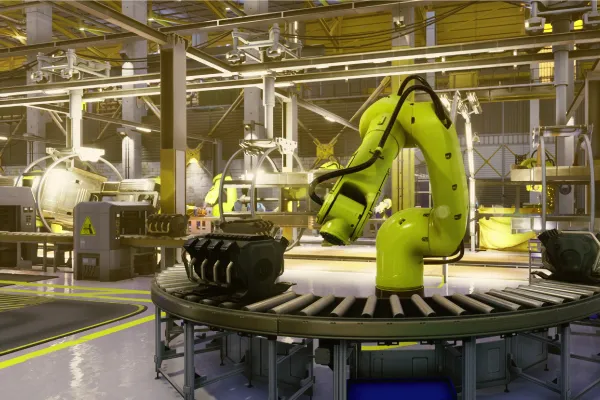
Robots today need to keep turning at many different joints, and each time they do, the cable bundle gets a little tighter. If that twist isn't fixed, it will cause fatigue, random problems, and eventually failure. Slip rings fix this by keeping an electrical connection open through a rotating interface. Capsule slip rings are the most popular choice for small, multi-axis platforms because they can accommodate many circuits in a small, sealed cylinder. This article talks about capsule slip rings, where they are used, what to think about when choosing them, and the design trends that will shape their future.
What Is a Capsule Slip Ring?
A capsule slip ring is a small electrical connector that spins to keep power and signals flowing between a stationary and a moving structure. All of the choices and integrations that follow are based on understanding how it was built and how it works electrically.
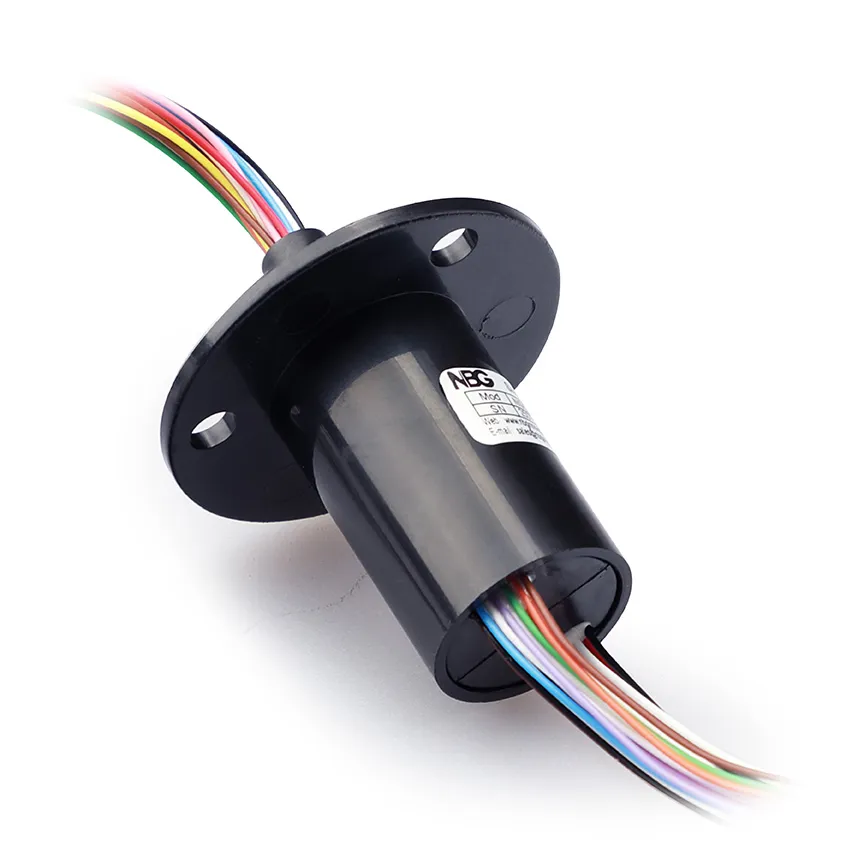
Construction and Form Factor
A capsule slip ring has a cylindrical, sealed housing that is typically 6.5-54 mm wide. There are conductive rings and spring-loaded brush assemblies inside. The rotor is connected to the shaft that turns with it. The stator stays in place on the machine's frame. A flange on the stator side is a standard mounting feature that makes it easy to attach a bracket directly. The lead wires at both ends are color-coded to make field wiring easier and reduce installation mistakes.
Signal and Power Handling Capability
A single housing can accommodate many different circuits using capsule slip rings. These include power delivery, analog control signals, and digital fieldbus protocols such as CANbus, Profinet, Profibus, Ethernet, USB, HDMI, and encoder feedback. The voltage for most electrical devices can be anywhere from 240 VAC/VDC to 1 A on signal channels and 10+ A on dedicated power rings. The insulation resistance is rated at ≥500 MΩ at 500 VDC. For precision robotics, gold-on-gold contact technology is the best choice because it has low electrical noise, stable contact resistance, and a long life. The same rotating assembly must be used for both encoder feedback and high-speed fieldbus signals.
Why Robotics Demands Capsule Class Slip Rings
Robotics is one of the most electrically demanding environments for slip rings to operate in. There are many cycles, different signal types, and small joint envelopes, so there is no room for solutions that are too large or unreliable. Capsule slip rings meet all three limits simultaneously.
The Compact Footprint Imperative
At each revolute joint, multi-axis robots, such as articulated, SCARA, delta, and collaborative robots, require a slip ring. The cumulative size budget makes it impossible to use anything other than compact capsule housings on three to six joints. Collaborative robots use capsule slip rings to power end-of-arm tools right into each joint. It keeps the robot's slim profile, which is necessary for safe human-robot interaction. When a central shaft pass-through isn't needed and axial depth is limited, capsule designs always do better than through-hole and pancake designs in terms of size and integration complexity.
Continuous Duty and High Cycle Reliability
Industrial robot arms run continuously and, over their service life, can make tens of millions of revolutions. Gold-alloy contact capsule designs are made to meet this need. A brief loss of power at a rotating joint can cause problems with the motion controller, sensor dropouts, and safety system triggers. So, contact stability is not just a measure of performance; it is also a requirement for system reliability.
Key Application Domains in Robotics and Automation
Capsule slip rings are found in almost every rotating subsystem in modern automation. For example, they are used in the wrist joints of industrial arms and the sensor heads of mobile robots. Different fields have different needs for electrical performance, size, and durability, depending on the environment.
Application | Primary Function | Key Signal Types |
Articulated & SCARA Arms | Wrist joint rotation | Fieldbus, encoder, power |
Collaborative Robots | Per-joint 360° rotation | Mixed power + data |
AGVs / AMRs | Rotating LiDAR/camera heads | CANbus, Profinet |
Packaging Machinery | Rotary stations, filling heads | Motor power, sensor signals |
Vision & Inspection Systems | PTZ and gantry cameras | HD video, lighting power |
Industrial Robot Arms with SCARA and Articulated
Capsule slip rings on SCARA wrist joints enable continuous high-frequency fieldbus transmission, reducing motion control loop cycle times. In articulated arms used for arc welding, spray painting, and pick-and-place, they stop the cables from recoiling and the wrist from wearing out. It ensures that the welding heads receive steady trigger pulses and the grippers receive reliable actuator power.
Collaborative Robots (Cobots)
Capsule slip rings are needed for each revolute joint of a cobot because they need to be able to rotate freely in all directions. Miniature designs with strict manufacturing tolerances reduce signal variation and packet loss. These are both important for the closed-loop safety systems that enable cobots to work next to people without physical barriers.
Automated Guided Vehicles (AGVs) and Autonomous Mobile Robots (AMRs)
Capsule slip rings enable AGVs to send power and fieldbus data simultaneously through the rotating interface, so navigation doesn't stop. In dangerous or confined spaces, cable-tethered inspection robots need a slip ring on the reel drum to maintain electrical connectivity as the cable unspools during deployment.
Packaging, Labeling, and Rotary Filling Machinery
Capsule slip rings keep motor power and sensor signals flowing between rotating stations in rotary labelers, heat-sealing heads, and wrapping spindles. Filling systems for bottles, vials, and cosmetics combine them to power actuators and read level-detection sensors in real time. It allows lines to run faster and reduces mechanical failure rates.
Vision and Inspection Systems
Capsule slip rings optimized for high-frequency video transmission are needed for PTZ cameras and machine-vision heads on rotating gantries. These rings keep the 4K feeds stable even when the camera is panning. For inspection accuracy in PCB, semiconductor, and pharmaceutical QC lines, camera and lighting circuits must be clean and free of interruptions through multi-axis rotation.
Technical Design Considerations
Choosing the wrong contact material or failing to pay sufficient attention to circuit density requirements are the two quickest ways to cause reliability issues at a rotating joint. These four factors determine the engineering choices that make a design strong enough to withstand field conditions.
Contact Materials and Electrical Noise
Gold-on-gold contacts resist oxidation better, maintain stable, low contact resistance, and generate less electrical noise, which is important for encoder feedback, Ethernet, and HD video channels. Silver-fiber brushes are a cheap option for circuits that need to handle more current and can handle some noise. In mixed-channel designs where cost and performance have to be balanced, hybrid assemblies that use gold signal rings and silver power rings are common.
Circuit Density and Signal Segregation
Shielded internal layouts and dedicated ground returns enable a high number of power, digital, and fieldbus channels in a sub-54 mm housing. The main design lever for keeping data safe while motor drive currents are running is to put high-power and sensitive data circuits on separate rings with their own shielding.
RPM, Torque, and Bearing Architecture
Standard miniature precision bearings made of stainless steel can handle high RPMs with low starting torque and don't wear out even after many cycles. The inertia load at the wrist joint directly affects the choice of bearings. Heavier assemblies create inertial loading, making it harder to place and pick up items accurately at high speeds.
Environmental Protection and Sealing
IP54 to IP67 ratings indicate that a device is safe to use in environments such as food and drug automation, factory floors with heavy dust, and outdoor AMR deployments. Hard gold plating, with a military-grade surface treatment, makes it resistant to chemicals, humidity, and corrosion in harsh process environments. Wikipedia's IEC 60529 is a good technical reference for more information on ingress protection standards. IEEE Spectrum covers new developments in industrial electrical components.
Selection Criteria: A Practical Engineering Framework
Most slip-ring integration failures occur because requirements are set too late in the design process. Going through these four criteria in order reduces most of the risk of redesigning late in the process.
Define the Electrical Requirements First
First, make a map of each circuit. It should include the current draw per channel, the voltage rating, the signal type, and whether shielded, dedicated rings are needed for Ethernet or video transmission. Find out early on if the application needs gold signal contacts, silver power contacts, or a combination of the two. This choice affects the size and cost of the housing before any other restrictions are imposed.
Envelope and Integration Constraints
Before choosing a catalog model or hiring a manufacturer to make a custom design, you need to know the outer diameter, axial length, and shaft interface geometry at each joint. A capsule design is the default choice when there is no need for a central shaft, pneumatic, or hydraulic pass-through. It is simpler and cheaper.
Operating Environment and Maintenance Profile
You should say how many million revolutions the robot is rated to last, which should match its scheduled maintenance interval. In clean-room or sealed-cell settings, fully sealed gold-contact capsule assemblies eliminate the need for scheduled brush maintenance, a significant extended cost-saving benefit.
Emerging Capability: Smart Diagnostics Integration
Next-generation capsule slip rings feature built-in sensors that monitor brush wear, drift in contact resistance, and signal quality. These sensors send data to IIoT platforms for predictive maintenance analytics. This feature reduces unplanned downtime without adding extra sensor hardware, a significant operational benefit as smart factories grow.
Conclusion
Capsule slip rings are the components that enable multi-axis robots to turn freely, transmit mixed power and data continuously, and fit within the envelope limits of high-speed and collaborative industrial platforms. The order of the selection is always the same: electrical needs first, then envelope needs, then environment, then service life, and finally new diagnostic capabilities. Engineers who set slip ring specifications early in the design cycle can avoid the costly redesigns that occur later when integration problems arise during commissioning.
NBG Innovations Group Pte.Ltd.
#13-13A, International Plaza, 10 Anson Road, Singapore (079903)


Navigation
 HomeSustainable
Product