


How to Choose a Wind Turbine Slip Ring Manufacturer: 12 Technical Questions to Ask
BY NBG
 2026-10-12
VIEWS: 795

How to Choose a Wind Turbine Slip Ring Manufacturer: 12 Technical Questions to Ask
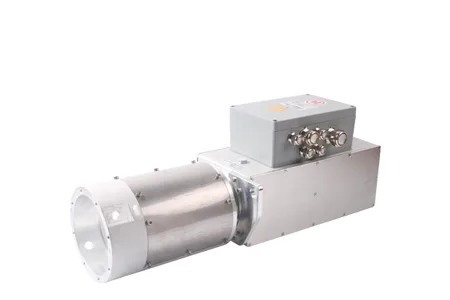
The pitch slip ring moves power and control signals between the rotating hub and the stationary nacelle. This lets the blade pitch actuators work on every rotation. When continuity is lost, a pitch fault occurs, which shuts down the turbine and directly cuts energy yield.
If you ask the right questions, you can tell the difference between a unit that you can install and forget about and one that will give you a headache 80 meters up a tower. For procurement engineers, asset managers, and OEM supply chain teams evaluating providers, this guide is what you need.
Why the Slip Ring Manufacturer Choice Is a Reliability Decision?
The slip ring sits in a hard-to-reach, dangerous part of the turbine, which makes replacement expensive and downtime costly. The working range must rotate continuously for decades, with major changes in temperature, vibration, constant moisture, and, at offshore sites, salt-laden air.
A broken unit usually needs a crane, a weather window, and techs who are experts in their field. Lifecycle cost isn't just the unit price; it also depends on the manufacturer's engineering choices. It is a good idea to check out suppliers on technical issues before sending out an RFQ.
Questions About Contact Technology and Service Life
1. What contact technology do you use — and why?
The market is mostly made up of three contact methods. Carbon or metal brushes have been used for a long time and are designed to shed wear debris. Fiber brushes have many small contact points and low force per contact. They produce little debris and don't require oiling. Monofilament metal brushes are in the middle. The answer reflects the supplier's approach to handling trash. Debris buildup can cause pitch communication problems, so figuring out what falls off the contacts is a valid technical question.
2. What is the design life and maintenance interval?
Ask how often the design is guaranteed to need maintenance and how long it will last in total revolutions or cycles. Leading fiber-brush designs are advertised as needing no maintenance up to a certain number of revolutions, while others call for regular maintenance, like visits every six months.
Distinguish between a marketing claim and a contractual number tied to clear operating conditions. Revolution-life numbers come from vendors and depend on the conditions. If you hear a number, ask what tests produced it.
Questions About Environmental Protection and Durability
3. What ingress protection (IP) rating is the housing sealed to?
IEC 60529 defines IP grades for protection against solid particles and water ingress. Offshore units usually need more than IP54, while onshore pitch slip rings usually aim for IP54 or higher. If the grade is achieved through labyrinth seals, lip seals, or positive-pressure dry-air purging, ask how it is done. Make sure the rating applies only to the sealed housing assembly, not to separate parts.
4. How is the unit protected against marine corrosion for offshore use?
Find out what class of corrosion protection the parts meet, how long the salt-spray testing took, and what standard it was done to. Also, find out what materials are used for the parts that carry current. Offshore qualification isn't the same as simply giving someone a better IP rating. The vendor sets corrosion class names and salt-spray hours, and you should confirm them for each job.
5. What is the operating temperature range, and how do you handle cold climates?
Arctic-rated designs can handle temperatures between -40 and +70 degrees Celsius. Confirm whether heaters are built in and whether power lines heat the blades in areas that need to prevent icing. Ensure the unit ships ready for use on the job site and doesn't arrive as-is, requiring expensive field changes.
Questions About Electrical and Data Performance
6. How does the slip ring integrate with the turbine's lightning protection?
Arctic-designed units can handle temperatures from -40 to +70 degrees Celsius. Confirm whether it has built-in heaters and power lines to heat the blades where needed. Make sure the unit ships ready to use on the job site. If it does not, changes will have to be made on the job site, which will cost a lot of money.
7. How do you manage EMC and power-to-signal crosstalk?
Brush arcing can mess up Ethernet, CAN bus, or Profibus data connected to the same assembly. Shielded signal rings, physical separation of power and signal ring groups, and shielded or twisted-pair terminations are all common ways to reduce interference. Ask how signal integrity is maintained with high-power circuits, and ask for test data if available.
8. Can it carry power and data together — including fiber optic?
Find out whether hybrid power-plus-data channel configurations are available and whether there is a fiber-optic rotary joint option for high-bandwidth blade sensor or condition-monitoring data. Make sure the number of channels and the amount of data you can send meet your current needs and your expected future needs as integrated blade sensor technology changes.
Questions About Fit, Standards, and Qualification
9. Is it a direct/plug-and-play replacement for my turbine, or custom-engineered?
Ask the supplier whether they offer straight bolt-in replacements for certain turbine models that match the mounting patterns, terminal block numbers, and gearbox interface, or whether they need custom configuration. Retrofit compatibility and current OEM approvals reduce installation risk and speed time-to-operation, which matters when technicians are working high up against a weather window.
10. Which standards and certifications does the product meet?
The IEC 61400 series, which covers lightning and structural loads, and IEC 60529, which covers ingress protection, are useful sources. So are any safety-integrity level requirements or OEM qualification paperwork. Instead of general quality guarantees, ask for specific standards and proof they meet them. Also, make sure they use the most recent edition, for example, IEC 61400-24:2019 with its 2024 amendment.
11. What environmental and type-test qualification data can you share?
Ask for test protocols and results that include environmental qualification, vibration, thermal cycling, salt spray, life testing, and material traceability. Qualification data is easy for mature suppliers to make or share. Not wanting to share test results is a red flag, especially if going back to the unit costs a lot of money.
Questions About Commercial and Lifecycle Support
12. What are the lead time, warranty, field track record, and aftermarket support?
Find out how many similar turbines have been installed, what the warranty covers, how easy it is to get spare parts, how long the lead time is, and whether engineering support can make the machine fit your site.
As important as the datasheet is, reliability data from real fleets in use matters even more. This is especially true offshore, where service calls are expensive and limited by bad weather. Price is a risk if a seller can't provide field reference data for a similar application.
Turning the Answers Into a Decision
For long-term maintenance costs, give the most weight to contact technology and design life. Site fit is based on environmental and rust qualification. Lightning protection and EMC performance affect safety and data dependability. Procurement risk is controlled by following standards and having post-sale support.
Claims of no maintenance without a clear test basis, named standards, qualification test reports, or field data from similar installations are red flags. The best manufacturer depends on the turbine type, whether it will be installed on land or at sea, and whether it is a new design integration or an MRO retrofit.
Conclusion
These 12 questions shift a purchase from price to engineering. They let teams focus on total cost of ownership instead of unit cost. A slip ring made to the right specifications reduces one more way a system can break down and be hard to fix. Ask suppliers for full specs or a review of how well their products work with your specific turbine model. They can answer your questions with facts, not generalizations.
NBG Innovations Group Pte.Ltd.
#13-13A, International Plaza, 10 Anson Road, Singapore (079903)


Navigation
 HomeSustainable
Product